

Lugar de origen:
Porcelana
Nombre de la marca:
RPS-SONIC
Certificación:
CE, ISO
Número de modelo:
RPS-SONO20-2 en 1
Contacta con nosotros
 El video
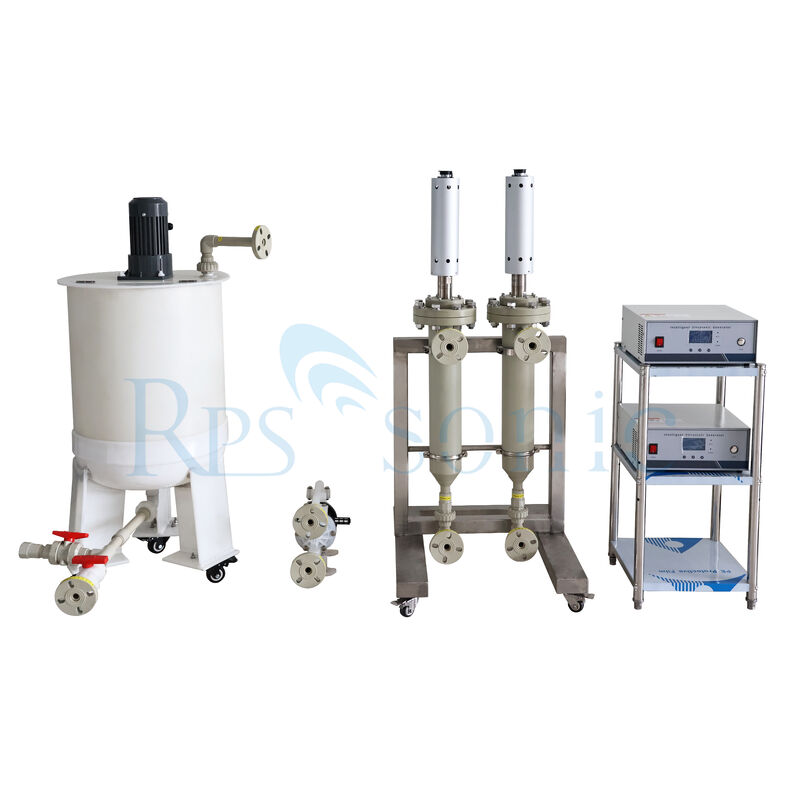
Máquina dispersora ultrasónica de grafeno en continuo, máquina homogeneizadora ultrasónica
Una máquina dispersora ultrasónica es un dispositivo que utiliza ondas ultrasónicas de alta frecuencia para romper partículas aglomeradas, mezclar líquidos inmiscibles y crear suspensiones o emulsiones estables y uniformes.
Explicación sencilla:
Utiliza cavitación ultrasónica —pequeñas burbujas se forman y colapsan violentamente en el líquido—, creando potentes ondas de choque y microchorros que:
Rompen partículas apelmazadas (grafeno, nanotubos de carbono, pigmentos, nanomateriales)
Mezclan aceite y agua en emulsiones estables
Dispersan polvos uniformemente en líquidos sin sedimentación
Usos principales:
Dispersión de grafeno, CNT, nanopartículas
Fabricación de tintas, recubrimientos, pastas para baterías
Preparación de emulsiones en cosmética, alimentos
Estructura clave:
Generador ultrasónico
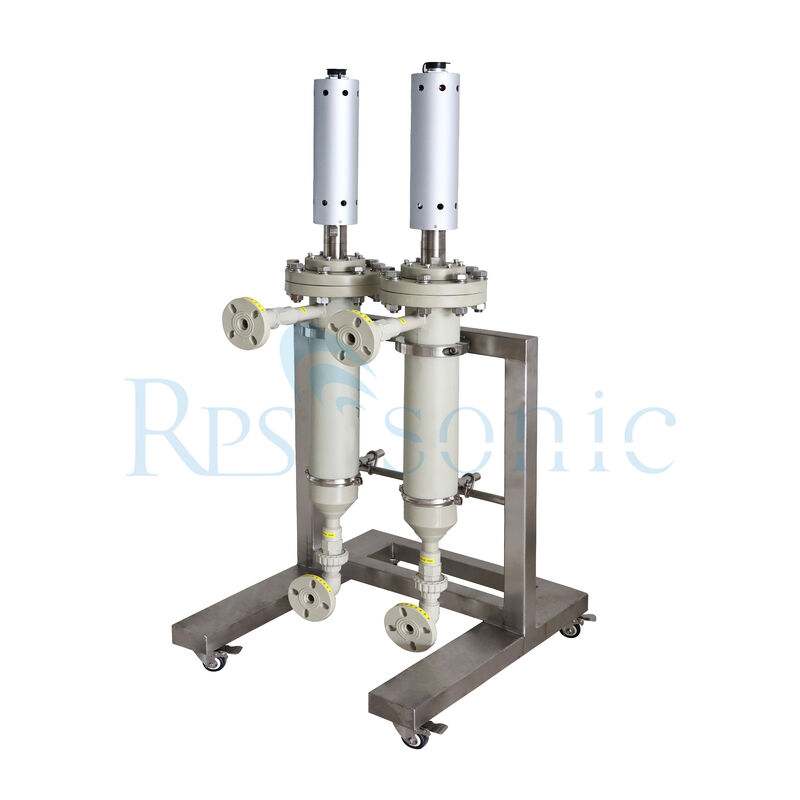
Transductor (convierte electricidad en vibración)
Sonda / bocina (transmite la vibración al líquido)
Parámetro
| Modelo | SONO20-1000 | SONO20-2000 | SONO15-3000 | SONO20-3000 |
| Frecuencia | 20±0.5 KHz | 20±0.5 KHz | 15±0.5 KHz | 20±0.5 KHz |
| Potencia | 1000 W | 2000 W | 3000 W | 3000 W |
| Voltaje | 220/110V | 220/110V | 220/110V | 220/110V |
| Temperatura | 300 °C | 300 °C | 300 °C | 300 °C |
| Presión | 35 MPa | 35 MPa | 35 MPa | 35 MPa |
| Intensidad del sonido | 20 W/cm² | 40 W/cm² | 60 W/cm² | 60 W/cm² |
| Capacidad máxima | 10 L/Min | 15 L/Min | 20 L/Min | 20 L/Min |
| Material de la punta | Aleación de titanio | Aleación de titanio | Aleación de titanio | Aleación de titanio |
Descripción
¿Cómo funciona (paso a paso)?
El generador de la máquina produce energía eléctrica de alta frecuencia (generalmente 20 kHz).
Esta energía se envía a un transductor, que convierte la electricidad en vibración mecánica de alta velocidad.
La vibración es amplificada por una bocina/sonda y transmitida al líquido.
Dentro del líquido, ocurre la cavitación ultrasónica:
Se forman millones de burbujas diminutas
Crecen rápidamente y luego colapsan violentamente
El colapso crea:
Potentes ondas de choque
Microchorros de alta velocidad
Intensas fuerzas de cizallamiento
Estas fuerzas rompen las partículas aglomeradas (como grafeno, pigmentos o nanopartículas) y las mezclan uniformemente en el líquido.
La dispersión ultrasónica utiliza la cavitación de la vibración de alta frecuencia para romper físicamente los grumos y crear mezclas estables y uniformes.
En los últimos años, el nanomaterial B se ha utilizado ampliamente en diversas industrias para optimizar el rendimiento de los materiales. Por ejemplo, añadir pintura de grafeno a la batería puede extender en gran medida la vida útil de la batería, mientras que añadir óxido de silicio al vidrio puede aumentar la transparencia y robustez del vidrio.
El contenido central de la nanotecnología es cómo resolver el problema de la aglomeración de nanopartículas. Debido a que las nanopartículas en sí mismas son muy fáciles de aglomerar, es muy difícil obtener una nanopartícula dispersa individualmente. Cómo dispersar uniformemente las nanopartículas en la matriz es la tecnología clave de la nanotecnología.
Para obtener nanopartículas excelentes, se requiere un método eficaz. La cavitación ultrasónica forma inmediatamente innumerables áreas de alta y baja presión en la solución. Estas áreas de alta y baja presión chocan continuamente entre sí para generar una fuerte fuerza de cizallamiento, despolimerizar y reducir el tamaño del material. Las ondas ultrasónicas utilizadas en la dispersión de nanomateriales generalmente requieren una presión de sonido y una amplitud ultrasónica relativamente grandes. Por lo tanto, el tipo de bocina, es decir, el tipo de sonda, es más comúnmente utilizado en la actualidad.
Recomendaciones
1. Si eres nuevo en nanomateriales y quieres entender el efecto de la dispersión ultrasónica, puedes usar materiales de laboratorio de 1000W / 1500W.
2. Si eres una pequeña o mediana empresa que maneja menos de 5 toneladas de líquido por día, puedes optar por añadir una sonda ultrasónica al tanque de reacción. Puedes usar una sonda de 3000W.
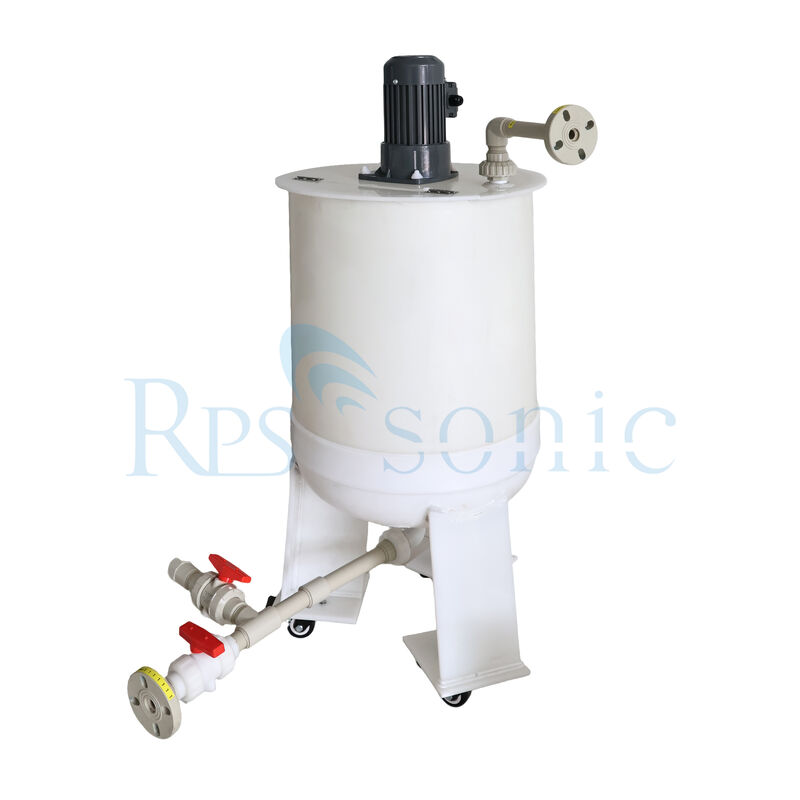
3. Si se trata de una gran empresa que necesita procesar decenas o incluso cientos de toneladas de líquido cada día, se requiere un sistema de circulación ultrasónica externo. Múltiples juegos de equipos ultrasónicos pueden procesar la circulación al mismo tiempo para lograr el efecto deseado.
Características
1. Diseño único de cabezal de herramienta de enfoque, mayor concentración de energía, mayor amplitud y mejor efecto de homogeneización.
2. El proceso de tratamiento ultrasónico se puede controlar, por lo que el estado terminal de la dispersión también es controlable, reduciendo así en gran medida el daño a los componentes de la solución.
3. Puede dispersar materiales a nivel nanométrico y manejar soluciones de alta viscosidad. El equipo puede equiparse con control PLC, lo que hace que la operación sea más fácil y el efecto sea más preciso
Envíenos su investigación directamente

